
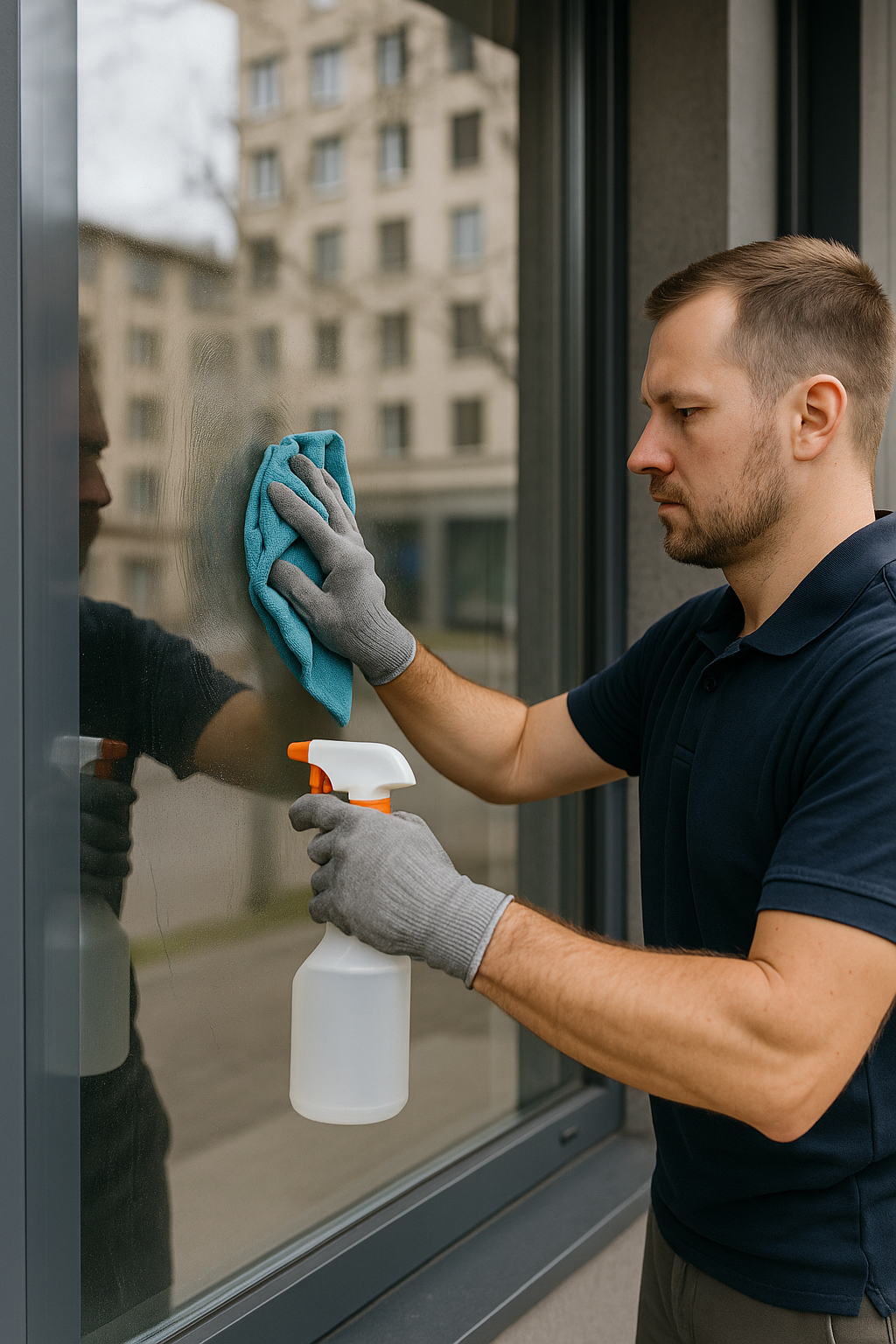
Have you ever walked past your own storefront and thought, “That glass looks dull”? You’re not imagining things. Those cloudy patches and streaks almost always come from hard water stains. Over time, mineral deposits build up and steal your glass’s clarity, undermining the professional look your business deserves.
Here’s the good news: you can restore that shine. In this article, we’ll walk you through five proven methods to remove hard water stains from commercial glass in Minneapolis, MN, from simple DIY fixes to professional restoration. We’ll also explain when basic cleaning isn’t enough and when it’s time to bring in a pro for acid-etch removal or full commercial glass restoration.
At Ascent Building Service, we believe your business should always look its best. That’s why we apply the same commercial maintenance standards here that we use in all our service areas—and why we provide professional acid-etch removal service as part of our restoration solutions.
Why Do Hard Water Stains Appear—and Why They Get Worse
What Are Hard Water Stains, Exactly?
Hard water stains are mineral deposits—mainly calcium and magnesium—that remain on glass after water evaporates. As the water dries, it leaves behind crystalline residues that slowly build up and cause that cloudy, filmy look.
Mineral Content in Minneapolis Water
To understand why this is a real issue in Minneapolis, check out these water stats: According to a Minnesota water hardness map, the average hardness in many Minnesota cities ranges from around 80 ppm up to several hundred.
Minneapolis sits on the lower end—about 85 ppm (≈5 grains per gallon)—but that’s still enough to leave minerals behind over time, especially when combined with sprinklers, HVAC runoff, or repeated wetting.
When Stains Turn Into Permanent Etching
Here’s where things get tricky. With repeated exposure to water, especially in alkaline or chemical-rich environments, glass can undergo a slow corrosion process. In effect, mineral deposits begin to etch into the microscopic surface of the glass itself.
When that happens, no amount of vinegar spray will fully restore clarity—you’ll need acid-etch removal or mechanical polishing as part of commercial glass restoration.
If mineral buildup has already progressed to that stage, it’s time to call a professional. Our acid-etch removal service is designed precisely for that kind of deep remediation.
5 Proven Methods to Remove Hard Water Stains on Commercial Glass
Here’s a practical toolbox. Start with gentle methods and progress to professional care if stains persist.
Vinegar + Water: Simple and Gentle
Why it works: Vinegar is acidic (acetic acid), which helps dissolve alkaline mineral residues.
How to use:
- Mix equal parts white vinegar and water in a spray bottle.
- Spray the stained area generously; let it sit for 10–15 minutes.
- Wipe with a microfiber cloth or non-abrasive sponge using circular motions.
- Rinse with clean water and dry with a lint-free cloth.
Best use-case: Light to moderate stains on flat storefront glass.
Caution: Test first on coated glass.
Baking Soda Paste: Gentle Abrasiveness
Why it helps: According to Olympian Water Testing, baking soda offers mild abrasion that helps lift mineral film without scratching.
How to use:
- Make a thick paste of baking soda and water (toothpaste consistency).
- Apply evenly to stained areas.
- Gently scrub with a soft brush or cloth.
- Let sit for 10–15 minutes, then rinse and dry.
Best use-case: When vinegar alone doesn’t cut it. Avoid excess pressure on large panels.
Commercial Hard Water Cleaners
Why use them: They contain stronger acids or chelating agents designed for mineral bonds.
How to use:
- Follow manufacturer safety instructions carefully.
- Apply a test patch first.
- Use gloves and goggles.
- Rinse thoroughly afterward.
Best use-case: Heavy stains on large glass façades.
Caution: Incorrect chemical strength can worsen etching.
WD-40: A Temporary “Spot-Helper”
You may have heard the question, “Does WD-40 remove hard water stains from glass?” It can, for light, superficial spots—but it’s not a long-term fix.
How it works: The oily film loosens mineral residues temporarily.
How to apply:
- Spray lightly on the stained spot.
- Wipe gently with a microfiber cloth.
- Clean leftover film with glass cleaner and rinse.
Limitations: WD-40 doesn’t treat deep mineral bonding or etched glass. Use it as a quick fix between professional cleanings.
Professional Hard Water Stain Removal & Restoration
When stains resist removal or the glass has been etched, it’s time to rely on professionals. Here’s what we bring to every job:
We use machine polishing with cerium oxide or diamond abrasives to smooth out the surface, along with acid-etch removal techniques to treat deep-etched glass. Our team applies controlled chemical processes that preserve protective coatings while meeting strict safety standards—and every service is backed by reliable results you can count on.
This professional approach remains the most effective way to restore full glass clarity on large storefronts and building façades. At Ascent Building Service, this process is part of our broader commitment to maintaining spotless, professional exteriors through specialized glass oxidation and restoration services tailored for commercial properties.
Can Hard Water Stains Be Fully Removed from Glass?
Short answer: Yes—if caught early. But results depend on the stain depth.
- Surface-level mineral buildup can often be fully removed with regular cleaning or safe commercial treatments.
- Once glass becomes etched from chemical or mineral exposure, full clarity restoration requires acid-etch removal or mechanical polishing.
- The sooner stains are addressed, the greater the success rate.
So, can hard water stains be removed from glass? Yes—but professional restoration gives you the best chance for lasting results.
Prevention: Keeping Your Glass Spotless Over Time
Preventing stains is always easier than removing them. Here’s how we recommend keeping your glass pristine:
- Regular cleaning — Rinse and wipe weekly to stop mineral layering.
- Water softeners or filters — Reduce mineral content in supply lines.
- Protective coatings or films — Hydrophobic barriers prevent buildup.
- Scheduled professional service — Plan quarterly or semiannual visits with a trusted maintenance partner.
Proactive upkeep minimizes future corrosion and keeps your storefront looking sharp all year long.
Why Minneapolis Businesses Turn to Ascent Building Service
For years, we have witnessed how dull or stained glass can easily diminish a building’s professional image. That’s why we provide comprehensive commercial property maintenance, with glass restoration serving as one of our core specialties.
We understand the unique challenges that Minneapolis properties face—freeze-thaw cycles, road salt, and hard water runoff that gradually damage glass surfaces. Our team uses proven restoration techniques designed to protect your windows for the long term while preserving their clarity and strength.
More importantly, we believe in building lasting relationships, partnering with business owners for consistent upkeep rather than one-time fixes. If glass clarity matters to your brand, we’re here to keep it spotless and professional.
Your Next Step to Clearer, More Professional Windows
Hard water stains do more than cloud your glass, they cloud your first impression. But with the right care, your storefront can look brand new again.
Start with safe DIY methods like vinegar or baking soda for mild buildup. For deep mineral deposits or etched glass, trust professionals who can restore full clarity with acid-etch removal and precision polishing. And remember- consistent maintenance is the best prevention.
Ready to see your building shine again? Contact Ascent Building Service today for expert hard water stain removal and commercial glass restoration in Minneapolis, MN. We’ll help your storefront reflect the quality your business represents.
