
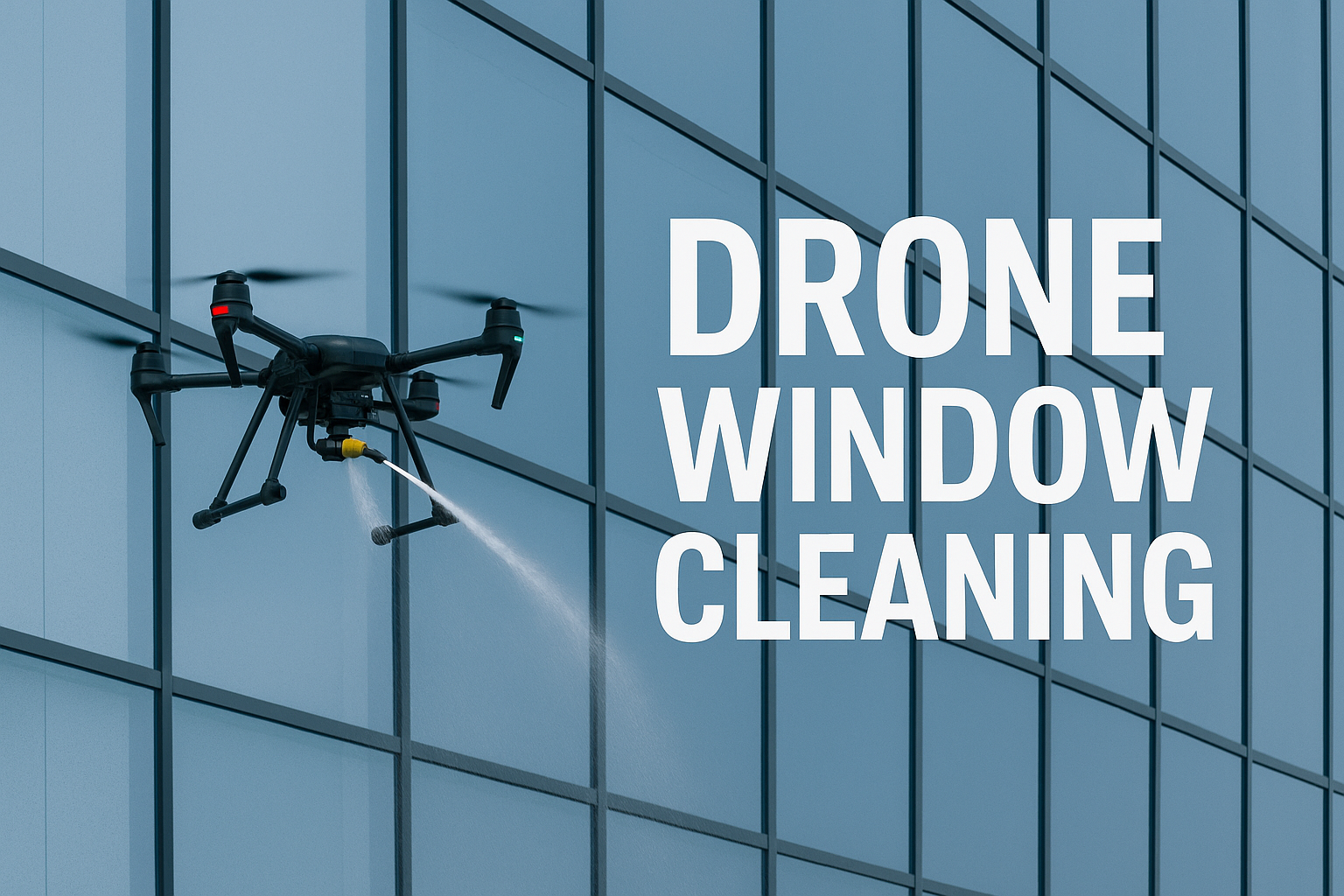
What Is Drone Window Cleaning?
Drone window cleaning is a modern evolution of façade maintenance that merges robotics, aeronautics, and precision engineering. Using high-performance drones equipped with water-fed brushes, sprayers, or ultrasonic cleaning systems, property managers can now achieve spotless glass surfaces without relying solely on traditional scaffolding or rope access methods. These drones are guided via remote control or automated navigation, mapping out a building’s exterior through GPS and LiDAR technology to clean efficiently and safely.
Unlike conventional methods, drones can access awkward architectural angles and fragile façades without the weight or vibration caused by human crews. They operate with precision—often within inches of the glass—delivering deionized water or specialized cleaning solutions that evaporate without streaks. The result is a blend of engineering innovation and operational efficiency, where cleanliness meets cutting-edge technology.
What Are the Pros and Cons of High-Rise Drone Window Cleaning?
Pros
- Enhanced Safety: Perhaps the most significant benefit lies in the reduction of risk. Drone cleaning eliminates the need for workers to suspend themselves hundreds of feet above the ground, dramatically reducing fall-related hazards.
- Environmentally Conscious: Many drone systems rely solely on purified water and battery power, producing zero emissions and eliminating the need for harsh detergents.
Cons
- Limited Battery Life: Drone operation is constrained by flight duration—typically between 20 and 40 minutes per charge—requiring frequent recharging or battery swaps for large-scale projects.
- Weather Dependency: Wind gusts, rain, and extreme temperatures can ground cleaning drones, delaying operations.
- Regulatory Barriers: Strict FAA regulations, especially in metropolitan areas, can restrict flight paths and require licensed operators.
- Surface Limitations: Drones are most effective on flat or gently curved glass façades; deep recesses, protruding ledges, or textured surfaces still require human attention.
Does Drone Window Cleaning Work?
In practice, drone window cleaning delivers decent results when deployed under the right conditions. Advanced models feature gyroscopic stabilization and pressure sensors that adjust cleaning intensity dynamically. They can remove grime, dust, and pollution residue just as effectively as a skilled technician on a suspended platform.
Commercial pilots report that it is easiest to clean mid-rise structures—five to fifteen stories tall. The process is also quieter and less disruptive, an advantage for properties with tenants or ongoing business operations. However, drones function best as part of a hybrid cleaning strategy: they handle large, unobstructed sections, while technicians address detailed or delicate areas manually. When combined, the system delivers both precision and polish, with measurable time and cost savings.
How Do Drones Compare to Human Window Washers?
Human window washers bring intuition, adaptability, and meticulous attention to detail—qualities that machines have yet to fully replicate. They can assess the condition of glass, caulking, and frames in real time, noting cracks, leaks, or defects. Drones, on the other hand, offer consistency and safety in high-risk zones.
In a comparative sense, drones excel in risk management, while human crews maintain superiority in inspection and fine detailing. The future of commercial window cleaning will likely be collaborative—humans overseeing fleets of drones, merging human judgment with mechanical precision. Together, they redefine what it means to maintain the skyline: efficient, sustainable, and safe from street level to summit.
