
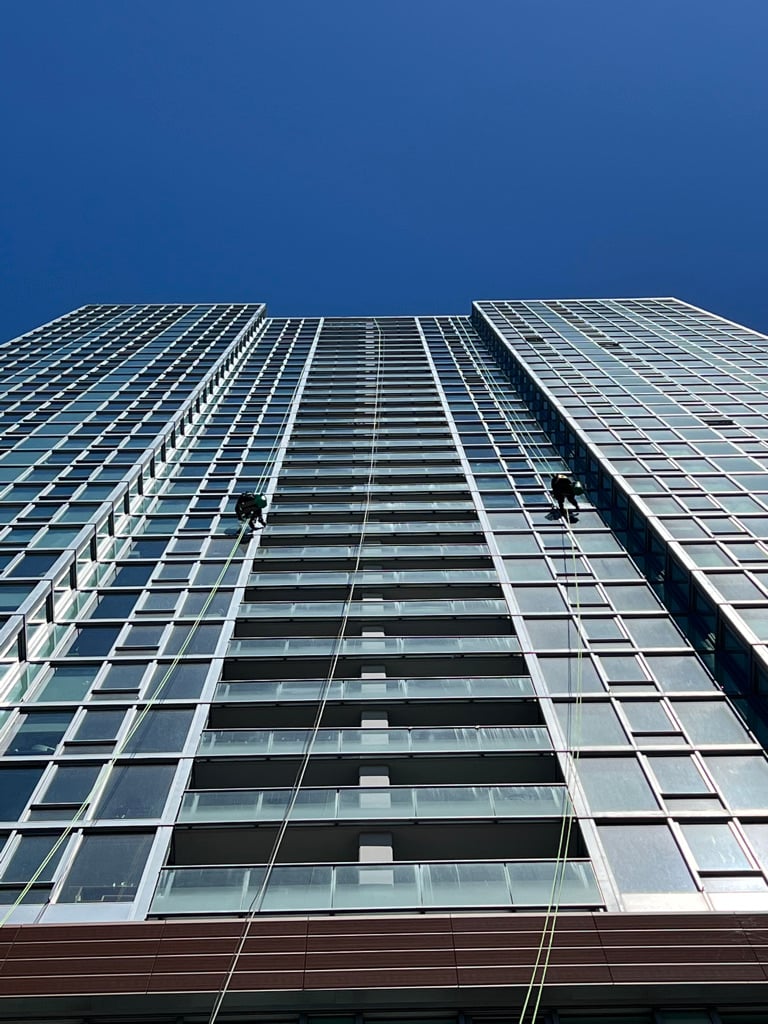
Chicago’s skyline is one of the most recognized in the country. From The Loop to Streeterville and along the lakefront, high-rise buildings define the city’s commercial and residential identity. But maintaining those towers requires more than routine exterior washing.
High rise building window cleaning is a specialized, high-risk discipline governed by strict OSHA regulations, engineered safety systems, and liability standards. Unlike standard exterior cleaning, high-rise operations involve rope access technicians, suspended systems, fall protection protocols, and insurance safeguards that protect both the building and the public below.
At Ascent Building Service, our approach to high rise window cleaning is rooted in compliance, risk mitigation, and long-term asset protection, not shortcuts. For property teams reviewing broader upkeep strategies, our full commercial property maintenance guide outlines how exterior services integrate into a complete asset protection plan.
Below are the seven safety and compliance standards that define professional high rise building window cleaning in Chicago.
What Qualifies as High Rise Building Window Cleaning?
In general, a building exceeding 75 feet or five stories is considered high-rise. These structures require specialized access methods such as rope descent systems or suspended scaffolds. In dense downtown environments like River North or the West Loop, these projects also demand pedestrian safety planning and strict weather monitoring.
High rise commercial window cleaning differs from low- or mid-rise services in three major ways: engineered anchor systems, certified rope access technicians, and formal fall-protection compliance. Without these, the risk profile changes dramatically.
OSHA 1910.27 Fall Protection Compliance
The foundation of high rise building window cleaning is OSHA compliance, specifically 29 CFR 1910.27, which governs window cleaning safety in high elevations. This regulation requires certified anchor points, fall arrest systems, inspection protocols, and documented employee training.
OSHA, based on its official safety requirements, mandates that all suspended work platforms and rope systems meet strict design and testing standards. Fall protection equipment must be regularly inspected and properly rated for load-bearing requirements.
For Chicago property managers, requesting documented OSHA compliance is not optional. It is essential.
Rope Access & Suspended System Safety Protocols
Modern high rise building window cleaning in Chicago often depends on rope access systems designed for precision and controlled movement along vertical facades. Certified technicians operate controlled descent devices that are securely anchored to engineered rooftop tie-back systems specifically rated for load-bearing safety.
In situations where large facade sections require broader coverage, suspended scaffolding systems may be deployed, each engineered and inspected to meet strict safety standards.
Regardless of the access method used, every operation demands certified anchor inspections, documented equipment checks performed daily, clearly defined wind threshold monitoring, and a structured emergency rescue plan prepared in advance.
Chicago’s lakefront wind patterns can shift quickly, making environmental assessment a critical component of every project. While rope access is highly efficient and, in many cases, safer than alternative methods, it must always be executed under certified supervision with full regulatory compliance to ensure both worker and public safety.
Required Insurance & Liability Coverage
High rise building window cleaning involves elevated risk exposure, which makes proper insurance coverage a critical requirement rather than a formality. A qualified contractor should carry comprehensive commercial general liability insurance, active workers’ compensation coverage, and sufficient umbrella liability protection to account for high-elevation operations.
In addition, property managers should confirm that the contractor can provide proof of additional insured status when necessary, ensuring the building owner’s interests are protected throughout the project.
Before approving any service agreement, it is essential to request updated certificates of insurance and verify coverage limits to confirm they align with the building’s risk profile.
Inadequate or expired coverage can expose property owners to significant financial liability in the event of accidents, property damage, or injury claims. Proper insurance validation is therefore a foundational component of responsible, risk-managed high rise commercial window cleaning in Chicago.
Risk Mitigation & Public Safety Controls
Improper high rise building window cleaning creates significant hazards: Falling tools or debris can endanger pedestrians.
Improper rigging can damage glass panels. Inadequate protection systems can cause injury or regulatory violations.
In pedestrian-heavy Chicago neighborhoods, sidewalk protection planning is essential. Work zones must be clearly secured and monitored. Technicians must follow strict equipment tethering procedures to prevent falling object risks.
Risk mitigation is not a secondary concern. It is the framework for every safe high rise glass cleaning project.
Structural Glass Protection & Longevity
Beyond safety, professional high rise building window cleaning protects the building envelope itself.
Chicago’s urban pollution, hard water minerals, and lakefront moisture can lead to glass etching, seal degradation, and surface staining. When contaminants remain untreated, they gradually damage facade systems.
Regular high rise glass cleaning helps:
- Prevent mineral etching
- Preserve clarity and aesthetics
- Extend the lifespan of glass panels
- Protect seal integrity
Routine maintenance is not cosmetic. It preserves long-term asset value.
Weather & Wind Threshold Operating Standards
Wind exposure is one of the defining variables of skyscraper window cleaning. Responsible contractors implement strict wind-speed thresholds and immediate shutdown protocols when conditions exceed safe limits.
Chicago’s lake-effect winds can shift rapidly, particularly in downtown corridors between towers. Certified technicians continuously monitor wind conditions before and during operations.
Seasonal considerations also matter. Winter ice formation, freezing temperatures, and rooftop snow accumulation require modified procedures and additional safety review.
Weather management is a defining difference between professional high rise building window cleaning and inexperienced operations.
Contractor Vetting Standards for Chicago High-Rises
Before selecting a contractor for high rise building window cleaning in Chicago, property teams should conduct a thorough compliance and qualification review. A reputable provider must be able to present documented OSHA compliance records, along with verified rope access certifications such as IRATA or SPRAT credentials.
Proof of adequate insurance coverage should be readily available, including general liability and workers’ compensation policies that protect both the building owner and on-site personnel. In addition, contractors should maintain written emergency rescue plans and detailed equipment inspection logs to demonstrate ongoing safety oversight.
Experience working on Chicago’s high-rise structures is equally important, as the city’s architectural density and wind conditions require specialized knowledge. High-rise window cleaning is not a commodity service. It demands verified training, disciplined safety execution, and documented regulatory compliance.
How Often Should High Rise Buildings Clean Their Windows?
Cleaning frequency varies based on building type and environmental exposure. Office towers in The Loop often schedule service two to four times annually to maintain professional presentation. Luxury condominiums and hotels may require more frequent cycles due to visibility and brand expectations.
Buildings exposed to high pollution corridors or lakefront wind patterns may require additional maintenance to prevent mineral buildup.
The right schedule balances aesthetics, tenant satisfaction, and long-term facade preservation.
Protect Your Chicago Skyline Investment the Right Way
High rise building window cleaning is not simply exterior maintenance. It is a compliance-driven, risk-managed specialty service that protects your building, your tenants, and your investment.
At Ascent Building Service, we approach every Chicago tower with engineered safety systems, certified technicians, and documented compliance protocols. Whether your property rises above The Loop, River North, or the lakefront, professional execution makes all the difference.
If your high-rise property is due for evaluation, request a consultation today and ensure your skyline asset is protected with precision and care.
FAQ: High Rise Building Window Cleaning in Chicago
What are OSHA requirements for high rise window cleaning?
OSHA requires certified anchor systems, fall protection equipment, inspection documentation, and trained personnel under 29 CFR 1910.27.
What insurance coverage should a high-rise contractor carry?
A qualified provider should maintain general liability, workers’ compensation, and umbrella coverage, with certificates available upon request.
What are the risks of improper high rise window cleaning?
Risks include fall hazards, falling object injuries, glass damage, seal deterioration, and regulatory violations.
How does regular window cleaning extend building glass life?
Removing pollutants and mineral deposits prevents etching and long-term facade damage.
Is rope access safer than scaffolding?
When performed by certified technicians under OSHA standards, rope access can be highly safe and efficient, particularly for complex facades.
