
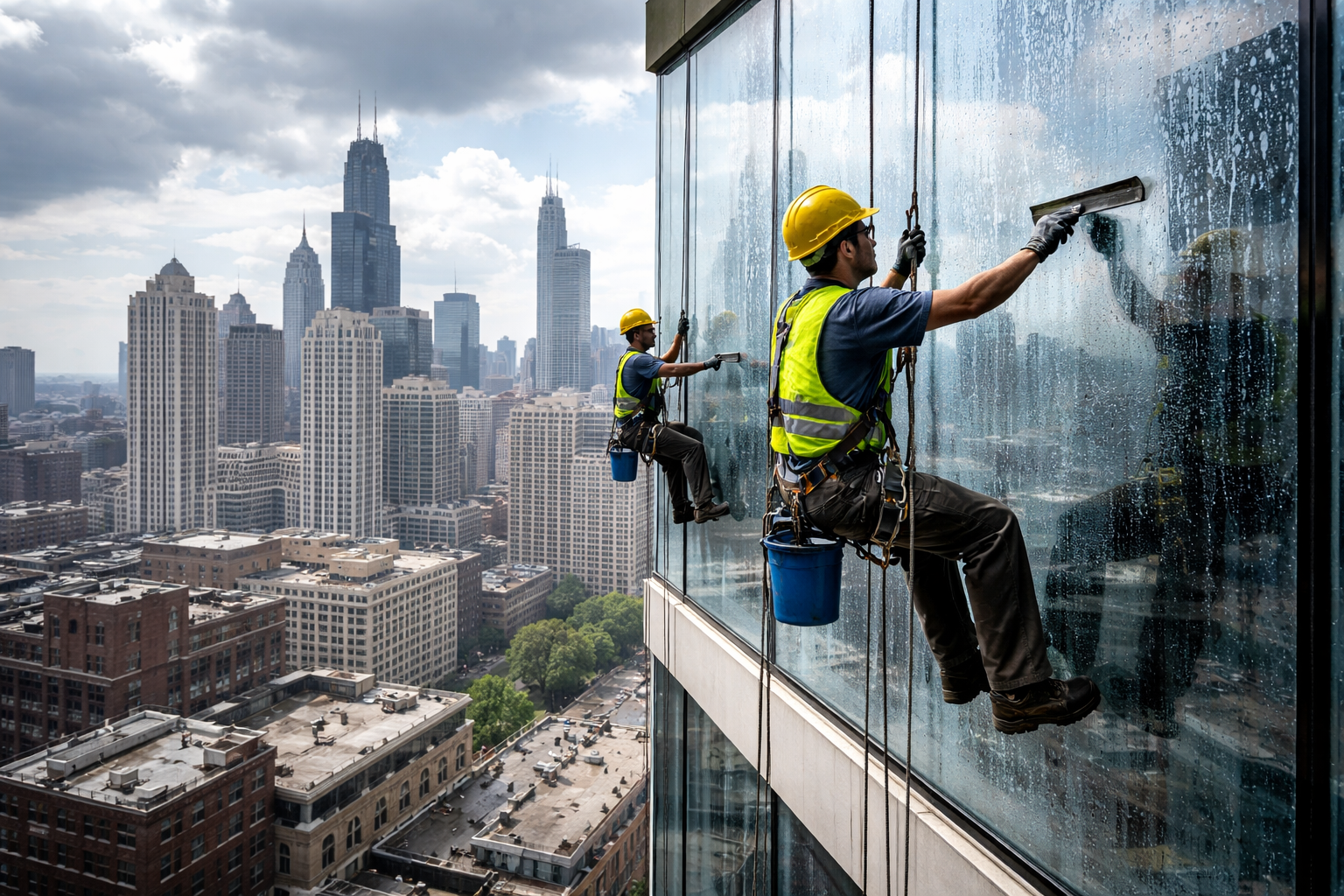
When a storm passes through Chicago, most building owners focus on the obvious—roof damage, flooding, or debris around the property. But one of the most overlooked risks is right in front of you: your windows.
What looks like simple dirt or streaking can quickly turn into permanent damage, safety hazards, and a poor first impression for tenants and clients.
We’ve seen it happen many times. Debris left sitting on glass scratches the surface during cleaning. Water spots harden into stains that no longer come off.
And in high-rise buildings, even a small oversight can become a serious safety issue. That’s why storm window cleaning isn’t just about restoring appearance. It’s about protecting your building, your investment, and the people who use your space every day.
Here’s how to handle it the right way.
What Is Storm Window Cleaning for Commercial Buildings?
Storm window cleaning is the process of removing debris, contaminants, and water stains from commercial windows after severe weather. It involves inspection, safe debris removal, and professional cleaning to prevent permanent glass damage, restore visibility, and maintain building safety and appearance.
Why Storm Window Cleaning Matters for Commercial Buildings
Storms don’t just leave behind visible mess. They introduce fine debris, pollutants, and mineral deposits that quietly damage glass over time.
Wind-driven particles can create micro-scratches, while rainwater mixed with urban contaminants can leave behind residues that etch into the surface if not addressed quickly.
For commercial properties, the impact goes beyond maintenance. Dirty or damaged windows affect how your building is perceived by tenants, customers, and partners. In a competitive city like Chicago, appearance and upkeep directly influence credibility.
There’s also the structural side to consider. Storms can weaken seals, shift frames, and expose vulnerabilities that aren’t immediately visible. Without proper inspection and cleaning, these small issues can escalate into costly repairs.
For taller properties, the risks multiply. High-rise buildings require specialized access, safety protocols, and experience. This is where professional high-rise window cleaning becomes essential, not optional.
What to Do Immediately After Storm Damage on Windows
The first 24 to 72 hours after a storm are critical. Acting quickly can prevent minor issues from becoming permanent damage.
Start with a visual inspection from a safe distance. Look for visible debris buildup, streaking, cracks, or anything unusual in the glass or frames. If there are safety concerns, like loose materials or unstable sections, restrict access to those areas immediately.
It’s also important to document what you see. Photos and notes can be valuable if insurance claims become necessary, especially when damage is linked directly to the storm.
At this stage, knowing when to bring in experienced professionals matters. A trained team can assess both visible and hidden issues efficiently.
The Ascent Building Professional team works with commercial property owners across Chicago to identify risks early and recommend the right next steps, before damage becomes more expensive to fix.
Step 1 – Inspect Glass and Frames for Hidden Damage
Before any cleaning begins, a thorough inspection is essential. Storms can cause subtle damage that isn’t obvious at first glance. Small chips, hairline cracks, or compromised seals may not stand out immediately but can worsen quickly if ignored.
Frames should also be checked for alignment and stability. Strong winds can shift components slightly, creating gaps that allow moisture to seep in over time.
Skipping this step often leads to problems later. Cleaning damaged glass without identifying these issues can make things worse, especially if pressure or friction is applied to already weakened areas.
Step 2 – Remove Debris Before Any Cleaning Begins
One of the most common mistakes after a storm is going straight into washing the windows. When debris like sand, dust, or organic material is still on the surface, cleaning without proper removal can drag these particles across the glass, causing scratches.
Debris removal must come first. This step ensures that the surface is safe to clean and prevents long-term damage that cannot be reversed.
In commercial settings, especially in Illinois where storms can carry a mix of urban and natural debris, proper removal techniques and tools make a significant difference. It’s not just about clearing the surface. It’s about doing it without introducing new damage.
We’ve handled cases where improper debris removal caused more damage than the storm itself, something that can be avoided with the right approach and tools.
Step 3 – Rinse and Neutralize Contaminants Safely
After debris is removed, the next step is to rinse the glass thoroughly and neutralize any remaining contaminants. Stormwater often contains pollutants, minerals, and residues that can bond to the glass if left untreated.
This stage is where many DIY approaches fall short. Using the wrong cleaning solutions or improper techniques can leave streaks, residue, or even worsen staining.
Proper rinsing ensures that all contaminants are lifted away safely. It also prepares the surface for deeper cleaning, allowing for a more consistent and professional finish.
This is especially important in urban environments like Chicago, where stormwater often carries higher levels of pollutants.
Step 4 – Treat Water Stains Before They Become Permanent
Water stains might seem harmless at first, but they can quickly turn into a bigger problem. When mineral deposits from rainwater sit on glass for too long, they begin to etch into the surface. Once that happens, standard cleaning won’t be enough to remove them.
This is why timing matters. Addressing stains early prevents permanent damage and helps maintain the clarity and lifespan of your windows.
In a city like Chicago, where storm conditions can vary and pollutants are often present in rainwater, proactive treatment is key. Waiting too long can mean the difference between simple cleaning and costly restoration.
Step 5 – Address Safety Risks in High-Rise and Commercial Settings
Safety should always be a top priority, especially for commercial buildings. After a storm, windows may be surrounded by unstable debris, slippery surfaces, or compromised structures.
For high-rise properties, the risks increase significantly. Accessing upper levels requires specialized equipment and trained professionals who understand safety standards and compliance requirements.
This is where emergency window cleaning services in Chicago become essential. Of course, it’s not just about getting the job done, however, it’s about doing it safely, efficiently, and without putting people at risk.
Professional teams are trained to handle these situations, ensuring that cleaning is completed without compromising safety or quality.
For high-rise and commercial properties, this is where experienced teams like Ascent Building Service play a critical role, ensuring the work is completed safely, efficiently, and in full compliance.
Step 6 – Schedule Professional Storm Window Cleaning for Long-Term Protection
Once the immediate issues are addressed, the next step is ensuring your building is properly restored and protected moving forward.
Professional storm window cleaning provides more than just a clean surface. It ensures that all aspects of the window, from glass to frames, are handled correctly. It also helps identify any lingering issues that may need attention.
For commercial buildings, consistency matters. Regular maintenance following storm events helps extend the life of your windows, maintain your property’s appearance, and reduce the risk of future damage.
Working with an experienced provider ensures that your building is not only cleaned, but cared for with a long-term perspective.
Why Chicago Buildings Need a Local Expert
Chicago’s weather is unpredictable, and its urban environment adds another layer of complexity. Strong winds, heavy rain, and airborne debris are common during storm seasons, and each can impact your windows in different ways.
Local expertise matters because it brings familiarity with these conditions. A team that understands Chicago’s environment can respond faster, work more efficiently, and provide solutions tailored to the challenges commercial buildings face here.
According to the Science Direct, pollutants and particulate matter carried by rainwater can contribute to surface contamination and long-term material degradation, making timely cleaning even more important for maintaining building exteriors.
Protect Your Building Before Small Issues Become Costly Repairs
Storm damage doesn’t always look serious at first, but left untreated, it can quickly turn into expensive problems. Scratched glass, etched stains, and unnoticed structural issues all add up over time.
Taking the right steps after a storm helps protect your investment, maintain your building’s appearance, and ensure a safe environment for everyone inside.
At Ascent Building Service, we’ve worked with commercial buildings across Chicago dealing with everything from minor post-storm residue to severe debris impact and safety risks. What we’ve learned is simple- timing and proper handling make all the difference.
If your building has just gone through a storm, now is the time to act. The longer you wait, the higher the risk of permanent damage.
Get a Free Quote and let’s help you restore and protect your property the right way.
Frequently Asked Questions
How soon should windows be cleaned after a storm?
Windows should ideally be cleaned within 24 to 72 hours after a storm. This helps prevent debris from causing scratches and stops water stains from becoming permanent.
Can storms permanently damage commercial windows?
Yes. Storms can cause scratches, etching from mineral deposits, and damage to seals or frames. If not addressed early, these issues can become permanent.
What is the safest way to clean windows after a storm?
For commercial and high-rise buildings, professional cleaning is the safest option. It ensures proper techniques are used while maintaining safety standards.
Should I hire emergency window cleaning services in Chicago?
If your building has heavy debris, safety risks, or visible damage, emergency services are recommended to address issues quickly and safely.
Does insurance cover window cleaning after storms?
In some cases, insurance may cover cleaning if it is directly related to storm damage. Proper documentation after the storm is important for claims.
What should building managers check first after a storm?
Start with a visual inspection of the glass, frames, and surrounding areas. Look for debris, cracks, and safety hazards before proceeding with cleaning.
