
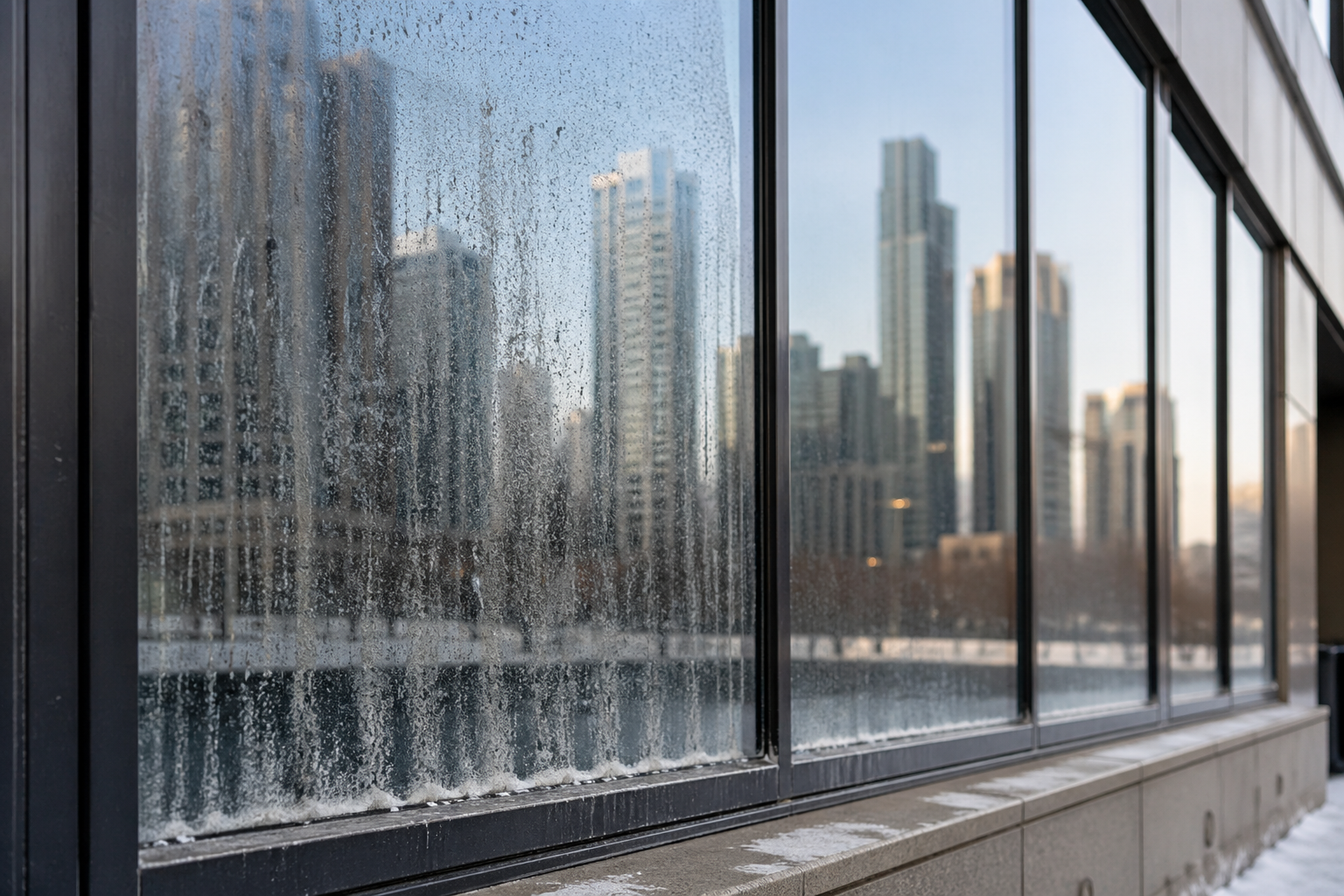
Why Commercial Window Glass Damage in Chicago Is Often Overlooked
Walk past any commercial building in Chicago after winter, and the glass may still look “clean” at a glance. But beneath that surface, damage is already forming. Salt spray from busy roads, airborne pollution, and constant moisture exposure quietly begin to etch and weaken the glass, long before anyone notices.
For property managers and building owners, this is where costs start to rise. What begins as light staining can turn into permanent corrosion, forcing premature glass replacement that could have been avoided. In a city like Chicago, where weather and urban conditions work against your building year-round, waiting too long is the most expensive mistake.
At Ascent Building Service, we’ve seen how quickly this damage progresses, and more importantly, how preventable it is with the right maintenance strategy.
What Causes Commercial Window Glass Damage in Chicago Buildings?
Glass doesn’t fail overnight. Damage builds gradually through repeated exposure to environmental contaminants and lack of proper care. In dense urban environments like Chicago, commercial buildings are especially vulnerable due to their size, height, and constant exposure to traffic and weather.
Salt, pollution, mineral deposits, and improper cleaning methods all contribute to the breakdown of glass surfaces. Over time, these elements bond with moisture, creating chemical reactions that lead to etching, staining, and corrosion.
This is why proactive care matters. Many property owners rely on reactive cleaning, addressing issues only when they become visible.
But by then, the damage is often permanent. Investing early in our commercial window cleaning services and understanding techniques like how to clean oxidation on windows can significantly extend the lifespan of your glass.
Road Salt and De-Icing Chemicals
Chicago winters bring heavy use of de-icing salts across roads, sidewalks, and parking areas. While essential for safety, these salts don’t stay on the ground. Wind and traffic carry fine salt particles upward, where they settle on building surfaces, including your windows.
Once salt mixes with moisture, it creates a corrosive solution that slowly eats into the glass surface. This process, known as etching, leaves behind permanent marks that no basic cleaning can remove.
The longer salt residue sits on the glass, the deeper the damage becomes. That’s why post-winter cleaning is not optional. It’s critical.
Air Pollution and Urban Contaminants
Chicago’s urban environment adds another layer of risk. Exhaust fumes, industrial emissions, and airborne debris continuously settle on glass surfaces.
When these pollutants combine with humidity or rain, they form acidic compounds. According to the United States Environmental Protection Agency, air pollution can contribute to surface degradation by forming acid-based residues that react with exposed materials. On glass, this leads to dullness, staining, and long-term corrosion.
Unlike visible dirt, these chemical reactions are subtle at first. But over time, they permanently alter the clarity and integrity of your windows.
Hard Water and Mineral Deposits
Water might seem harmless, but in many cases, it’s one of the biggest contributors to glass damage. Rainwater runoff, sprinkler systems, and cleaning water often contain minerals like calcium and magnesium.
When water evaporates, these minerals are left behind on the glass. Repeated exposure leads to buildup, creating cloudy spots and streaks that are difficult to remove.
Without proper treatment, mineral deposits bond to the glass surface, requiring professional glass restoration to reverse the damage.
Lack of Regular Commercial Glass Maintenance
One of the most common and costly causes of glass damage is neglect. Without regular maintenance, contaminants accumulate and accelerate the breakdown process.
Dirt, salt, and pollutants don’t just sit on the surface. They interact with each other. Over time, this combination intensifies corrosion and makes cleaning less effective.
Routine maintenance is not just about appearance. It’s about preventing small issues from becoming permanent damage. A structured cleaning schedule tailored to Chicago’s climate can significantly reduce long-term costs.
Improper Cleaning Methods and Tools
Not all cleaning methods protect your glass. In fact, using the wrong tools or chemicals can cause more harm than good.
Abrasive pads, harsh chemicals, and improper techniques can scratch the surface or strip protective layers. Once the glass is compromised, it becomes more vulnerable to environmental damage.
Professional cleaning ensures that the right methods are used, removing contaminants without damaging the glass itself.
How to Prevent Commercial Window Glass Damage in Chicago
Preventing damage is far more cost-effective than repairing or replacing glass. The key is consistency and timing.
Start with regular cleaning schedules that remove contaminants before they have time to react with the glass. Pay special attention to seasonal transitions, especially after winter, when salt buildup is at its peak.
Using professional-grade cleaning solutions and techniques ensures that contaminants are fully removed without damaging the surface. Early detection also plays a critical role, identifying minor issues before they escalate into costly repairs.
In a city like Chicago, prevention is not a one-time effort. It requires a proactive approach that adapts to changing environmental conditions.
How to Restore Damaged Commercial Glass (Before It’s Too Late)
When damage has already occurred, restoration may still be an option, depending on severity. Professional glass restoration techniques can remove surface stains, mineral deposits, and light etching.
This process restores clarity and extends the life of your windows without the need for full replacement. However, once corrosion penetrates deeper layers, replacement becomes unavoidable.
That’s why timing matters. Addressing issues early allows for restoration instead of replacement, saving both time and cost.
Why Chicago Commercial Buildings Need a Proactive Maintenance Plan
Chicago’s environment is uniquely harsh on building exteriors. Between freezing winters, road salt, heavy traffic, and industrial activity, glass surfaces are constantly under stress.
A proactive maintenance plan helps protect against these factors by combining regular cleaning, seasonal adjustments, and early intervention. It also ensures your building maintains a clean, professional appearance, which is an important factor for tenants, clients, and visitors.
At Ascent Building Service, we focus on prevention first. Our approach is designed to help property owners avoid unnecessary replacements while keeping their buildings looking their best year-round.
Don’t Let Hidden Glass Damage Turn into Costly Replacements
Commercial window glass damage in Chicago doesn’t happen overnight, but it becomes expensive when ignored. Salt, pollution, and moisture quietly break down glass surfaces, turning minor issues into major expenses.
The good news is that most of this damage is preventable. With the right maintenance strategy, you can protect your investment, extend the life of your windows, and avoid costly replacements.
If you’re starting to notice signs of buildup, staining, or reduced clarity, now is the time to act.
Connect with us today and get a free quote to protect your building before the damage becomes permanent.
Frequently Asked Questions About Commercial Window Glass Damage
How does salt damage commercial windows?
Salt particles settle on glass surfaces and react with moisture, creating a corrosive solution that leads to etching and permanent surface damage.
What causes window corrosion in commercial buildings?
Corrosion is typically caused by a combination of pollution, mineral deposits, moisture exposure, and lack of regular maintenance.
Can pollution damage building windows?
Yes. Airborne pollutants mix with moisture to form acidic residues that gradually degrade glass surfaces over time.
How to prevent glass damage in winter?
Regular cleaning, especially after winter, helps remove salt buildup and prevent long-term damage. Professional maintenance ensures deeper cleaning and protection.
How to restore damaged commercial glass?
Professional restoration can remove surface stains and minor etching. Severe damage may require glass replacement if not addressed early.
Is commercial glass maintenance necessary?
Yes. Routine maintenance prevents corrosion, reduces long-term costs, and keeps your building looking professional.
