
Your building does not wait for a convenient date to collect grime, develop a leak, or show winter wear. The challenge is knowing what needs attention now and what can stay on the calendar.
At Ascent Building Service, we help you plan exterior cleaning around your property’s needs. For commercial building maintenance in Skokie, IL, four seasonal checkpoints offer a useful starting point, supported by routine observations and additional service when conditions change.
That does not mean pressure washing every wall or cleaning every window four times annually. It means reviewing the right areas before small concerns become harder to manage.
Quick Answer
How often should commercial buildings be maintained?
Commercial buildings should be monitored year-round, with exterior
maintenance reviewed at least seasonally. In Skokie, four useful
checkpoints are spring assessment, summer cleaning, fall
preparation, and winter monitoring. Maintenance frequency
should also increase when weather, building use, visible damage, or
recurring cleanliness issues require attention.
4 Key Exterior Maintenance Checkpoints
- Spring: Assess winter wear, drainage, leaks, and exterior surfaces.
- Summer: Adjust cleaning frequency based on traffic, pollen, construction, and building use.
- Fall: Clear drainage areas and prepare exposed surfaces before freezing weather.
- Winter: Monitor entrances, ice, leaks, drainage, and weather-related damage.
Set a Baseline That Fits Your Property
How often should commercial buildings be maintained? Start with regular observations, seasonal reviews, and task-specific service intervals. As a practical planning example, your staff might check busy entrances daily and complete a broader ground-level exterior walk-through monthly.
Review your plan each season and reassess the overall budget and contractor responsibilities annually. Manufacturer instructions, applicable inspection requirements, and known defects take priority over this suggested framework.
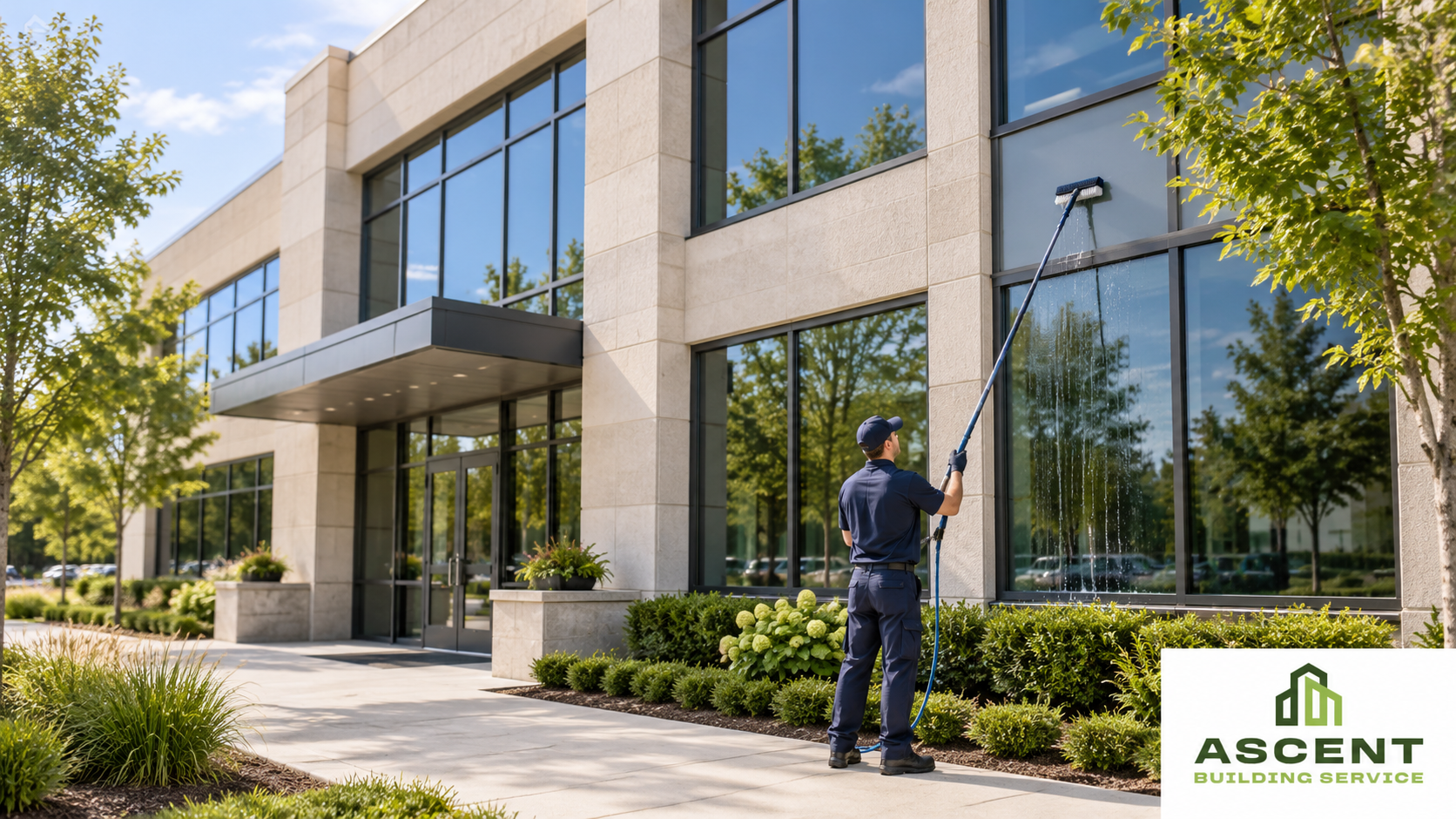
For glass care, our Commercial Window Cleaning at Skokie, IL services include one-time and recurring options. We consider access, building height, and maintenance needs when planning the work.
Effective commercial building maintenance in Skokie, IL separates routine cleaning from specialist inspections. Window washing does not replace assessments by qualified roofing, façade, or structural professionals.
Look Beyond the Most Visible Surfaces
Your exterior maintenance schedule should cover windows, frames, façades, entrances, walkways, lighting, signage, and drainage. Include visible seals and joints, while leaving inaccessible areas to appropriately equipped professionals.
Regular commercial window cleaning removes dirt that can obscure your displays and leave customer-facing glass looking neglected. Our article on Ways Clean Storefront Windows Increase Foot Traffic in Skokie, IL explores how clear glass supports visibility and first impressions.
We encourage you to treat appearance and condition as separate checks. A freshly cleaned surface can still have a damaged seal, recurring leak, or drainage problem that needs another contractor’s attention.

Spring: Assess Winter Damage and Exterior Maintenance Needs
Once conditions allow safe access, review what winter left behind. Look for salt residue near entrances, stained glass, damaged joints, and water collecting where it should drain away.
Arrange suitable cleaning for affected windows and hard surfaces. Have qualified personnel check gutters, downspouts, and roof drainage, especially where overflow or leaks were reported. Photograph concerns so you can compare them with earlier records.
The U.S. Environmental Protection Agency associates delayed or insufficient maintenance with moisture problems in schools and large buildings. It also identifies roof leaks and gutters that direct water toward or beneath buildings as potential moisture sources.
This supports including drainage and leak follow-up in your spring plan. Cleaning improves appearance, but stopping unwanted water requires identifying and correcting its source.
Summer: Adjust Your Exterior Cleaning Schedule to Building Use
Summer is a useful time to review how quickly your property becomes dirty between visits. Pollen, bird activity, nearby construction, and customer traffic can make a fixed exterior cleaning schedule less effective.
A busy storefront may need glass care more often than upper-floor office windows. Track how long acceptable results last, then discuss whether weekly, monthly, quarterly, or another interval suits each area.
At Ascent Building Service, we offer customized window cleaning schedules and discuss timing around your property’s operations. Tell us about deliveries, tenant access, and peak customer hours before work is arranged.
For suitable hard surfaces, professional pressure washing may also be appropriate. The contractor should match the method to the material and condition, following manufacturer guidance. Higher pressure is not automatically the better choice.
Fall: Prepare Drainage and Exposed Areas Before Freezing Weather
Fall preparation should focus on what could become difficult to address after freezing weather arrives. Arrange debris removal from gutters and drainage areas, and check whether downspouts discharge water away from the building.
Leaves can continue falling after an initial cleanup, so another check may be needed. Review visible sealant gaps, loose materials, and recurring damp spots, then assign repairs to the appropriate specialist.
Shorter daylight hours also make exterior lighting worth checking. Confirm that entrances and walking routes remain visible and report damaged fixtures or uneven surfaces.
For commercial building maintenance in Skokie, IL, the value of fall planning is having time to act. The book needed cleaning and repairs with enough flexibility for weather delays instead of leaving everything until the first freeze.
Winter: Monitor Access, Ice, Leaks, and Exterior Conditions
Winter shifts the focus toward safe access and prompt response. Your property team and snow-management contractor should monitor entrances, walking routes, snow accumulation, and changing ice conditions.
After significant storms or thaws, observe accessible areas for new leaks, blocked drainage, or visible damage. Keep people away from suspected falling-ice hazards and involve qualified professionals. Staff should not climb onto icy roofs to investigate.
Exterior washing depends on temperature, wind, access, and the risk of water refreezing. Some work may need to wait for safer conditions, but an active leak or immediate hazard should not wait until spring.
Keep a dated record of winter concerns. This gives your spring contractors specific locations and symptoms to investigate.
Increase Service When Conditions Change
Building maintenance frequency should respond to evidence. If glass looks dirty well before the next visit, shorten the interval for that area. If landscaping changes introduce more debris, reconsider nearby drainage checks.
Storm damage, construction dust, tenant complaints, and repeated staining can also justify an earlier review. However, recurring stains may signal a leak or another underlying issue, not simply a need for more washing.
For facility maintenance in Skokie, distinguish appearance problems from repair needs. This helps you direct spending toward the right work instead of repeatedly cleaning a symptom.
Build a Preventive Maintenance Checklist Your Team Can Use
For commercial building maintenance in Skokie, IL, a useful preventive maintenance checklist makes responsibility clear. Keep one shared record with these details:
- Area or component: Identify the window group, entrance, façade section, or drainage point.
- Timing: Record routine checks, service dates, and weather-related triggers.
- Responsible person: Name the staff member or qualified contractor handling each task.
- Observed condition: Add dated photographs and clear notes about changes.
- Required action: Separate cleaning requests from repairs, urgent hazards, and specialist assessments.
- Completion and follow-up: Confirm the work was finished and schedule another check if needed.
Review unresolved items regularly. A checklist only supports preventive care when someone follows through on what it records.
Give Your Next Season a Cleaner Start
You do not need the same service everywhere on the same date. You need a plan that keeps your property presentable, assigns responsibilities, and leaves room to respond when conditions change.
At Ascent Building Service, we help Skokie businesses arrange window cleaning around their building’s access and service needs. Bring us your concerns, preferred timing, and maintenance priorities so we can discuss a practical cleaning schedule.
Ready to plan your next service? Contact Ascent Building Service today to request a free quote and discuss your property’s exterior cleaning needs.
Frequently Asked Questions
How often should commercial buildings be maintained?
Maintenance is ongoing. Use routine observations, seasonal planning, and task-specific schedules. Adjust the timing for building condition, use, manufacturer instructions, and applicable inspection requirements.
How often should commercial windows be professionally cleaned?
The interval varies by exposure and appearance needs. Busy storefronts may need weekly or monthly cleaning, while other windows may suit quarterly or semiannual service. Confirm the schedule for your property.
What does an exterior maintenance schedule include?
Include windows, façades, entrances, walkways, drainage, lighting, and visible joints. Record who checks each area, when cleaning is due, and which findings require specialist attention.
Is spring or fall better for exterior maintenance in Skokie?
Both have value. Spring helps you assess winter wear, while fall provides time to prepare for colder weather. Neither replaces summer upkeep, winter monitoring, or prompt repairs.
Can professional cleaning replace a building inspection?
No. Cleaning may make visible concerns easier to notice, but it cannot confirm structural soundness or diagnose concealed defects. Use qualified specialists for technical inspections and repairs.
