

A cloudy pane, a new draft, or a water stain beneath a window can turn an ordinary workday into a maintenance problem. When you manage a commercial property, you need to know what requires attention and how quickly to act.
At Ascent Building Service, we believe good window care starts with a clear plan. Scheduling a commercial glass inspection in Lincolnwood, IL, alongside regular cleaning helps you stay informed about your property’s condition.
Our Commercial Window Cleaning at Lincolnwood, IL supports that routine with one-time and recurring cleaning options tailored to your building.
Make Inspection Planning Part of Your Window Care Routine
Cleaning and inspection serve different purposes. Regular commercial window cleaning removes surface buildup and improves clarity. An inspection evaluates condition and helps identify concerns that may need a qualified glazing professional’s attention.
The Certified Commercial Property Inspectors Association explains that damaged window gaskets can allow moisture into buildings and that fogging between glass panes can indicate seal failure. We encourage Lincolnwood property managers to check both the glass and its surrounding components, then arrange professional assessment when concerns appear.
For commercial glass maintenance in Lincolnwood, that means coordinating cleaning, inspections, and follow-up work. Our article on Reasons why Businesses invest in Window Cleaning Services explains how recurring cleaning fits into ongoing property care.
With that foundation in place, five benefits make inspection planning worth your attention.
Catch Developing Defects Before They Become Larger Problems
Small changes are easier to overlook when you see the same windows every day. A chip near an edge or a seal beginning to separate may blend into the background until someone takes a closer look.
Regular building glass inspections create an opportunity to record those changes and arrange an assessment. Some defects can worsen, and understanding their condition helps you decide what needs prompt attention.
We encourage property managers to record the location and date of a concern. A qualified professional can then determine whether repair, replacement, or continued monitoring is appropriate.
Identify Safety Concerns Around Busy Areas
Glass near an entrance or customer walkway deserves careful attention because people pass it throughout the day. Damaged panes, loose components, or windows that no longer operate properly can affect how safely that space is used.
An inspection helps bring these concerns into your maintenance process. For example, a reported movement in a frame should lead to an assessment of the affected area and its components.
If glass appears unstable or broken, keep people away and arrange prompt professional assistance. Close inspection of elevated windows also requires suitable access equipment and trained personnel.
Find Potential Paths for Water and Air Leaks
A water mark below a window can be a clue that moisture is entering around the opening. Gaps in perimeter seals or deteriorating gaskets may allow water or outside air through, affecting nearby finishes and indoor comfort.
Fogging between insulated glass panes is another concern. Unlike moisture on an exposed surface, condensation trapped between panes can indicate a failed insulating glass seal.
These symptoms deserve investigation because the repair should address the cause. An inspection can help direct that work, while properly completed repairs provide the improvement in water resistance or comfort.
Preserve a Professional Appearance Through Better Glass Care
Clear glass helps customers see your displays and gives offices a well-kept appearance. However, cloudy or marked glass does not always need the same treatment.
A condition review helps distinguish surface buildup from damage or an issue inside an insulated unit. That distinction matters before anyone reaches for stronger chemicals or abrasive tools.
At Ascent Building Service, we tailor cleaning around your property’s access, condition, and schedule. For preventing window damage during cleaning, methods should suit the glass and any exposed coatings. Recurring care can then address removable buildup while persistent defects receive appropriate assessment.
Make Maintenance Budgets and Scheduling More Predictable
An inspection record gives you something concrete to work from when setting priorities. You can identify what needs an urgent assessment, request estimates for planned work, and coordinate cleaning around those activities.
Imagine a review identifies concerns in three windows. Recording each location, the observed condition, and the recommended next step helps you assign the work and track completion.
We recommend keeping these records with your property’s maintenance information. Comparing findings over time can also help you see whether the same issue keeps returning and needs a closer investigation.
When Should Commercial Glass Be Inspected?
An annual review is a practical planning point for many properties, but the right frequency depends on the window system, its condition, exposure, and manufacturer recommendations.
For a commercial glass inspection in Lincolnwood, IL, a spring visit can provide an opportunity to review conditions after winter. Your inspection professional may recommend a different schedule based on the building.
Arrange earlier attention after an impact, significant storm, new leak, visible crack, or unexpected movement. Existing problems should not wait for the next annual appointment.
When comparing window inspection services, ask what the assessment covers, how inaccessible areas are handled, and whether you will receive documented findings and follow-up recommendations.
What Belongs on an Annual Glass Inspection Checklist?
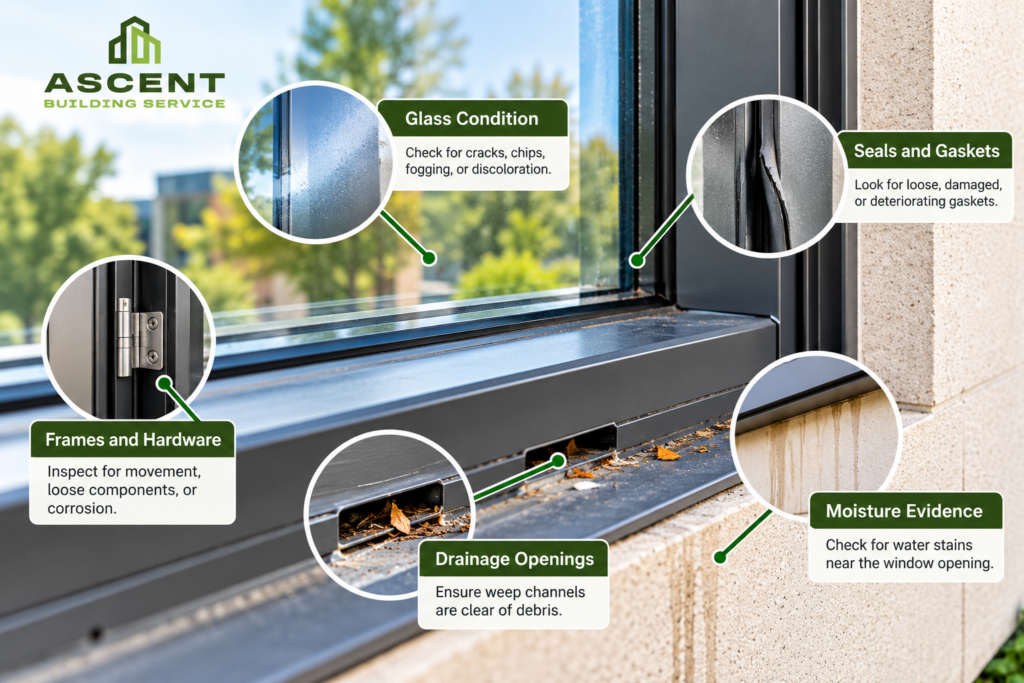
A useful annual glass inspection checklist covers the window system and the evidence around it. For safely accessible areas, record the following:
- Glass condition: Note visible chips, cracks, scratches, and persistent fogging between panes.
- Seals and gaskets: Look for visible gaps, separation, or deterioration.
- Frames and hardware: Record corrosion, damaged parts, looseness, or changes in operation.
- Drainage openings: Note visible debris or obstructions needing appropriate attention.
- Interior surfaces: Check for staining, dampness, or damaged finishes near windows.
- Surface buildup: Identify deposits or marks requiring suitable cleaning methods.
- Follow-up details: Save photographs, dates, window locations, and assigned next actions.
This checklist supports clear reporting. Leave inaccessible areas and hands-on diagnostic work to qualified professionals.
Give each finding an owner and a follow-up date so that observations become completed maintenance tasks.
Give Your Lincolnwood Windows a Plan Before Problems Set the Schedule
Your windows deserve a place in the maintenance calendar. Pairing regular cleaning with appropriate inspections helps you understand their condition and organize the work they need.
Ascent Building Service helps Lincolnwood property managers keep window cleaning consistent with service tailored to the building and business schedule.
Tell us about your property, access needs, and current concerns. Contact us for a free consultation about your cleaning needs and a personalized quote, then build a practical routine around your priorities.
Connect with us today and get a free quote.
Frequently Asked Questions
Is an Annual Glass Inspection Enough for Every Commercial Property?
Some properties need more frequent reviews because of their window system, condition, exposure, or manufacturer guidance. Annual planning should also allow for earlier checks when damage, leaks, or operation problems appear. A qualified inspection professional can recommend a suitable schedule.
What Are the Signs Commercial Glass Needs Repair?
Common warning signs include cracked or chipped glass, persistent fogging between panes, deteriorating seals, water staining, and loose components. These signs call for assessment. The appropriate response depends on the cause and severity, so a professional should determine whether repair or replacement is needed.
What Should an Annual Glass Inspection Checklist Include?
Include glass, seals, frames, hardware, drainage openings, nearby moisture evidence, and surface buildup. Record where each concern appears, when it was observed, and what follow-up is assigned. Consistent documentation makes it easier to compare findings and track unresolved items.
How Can Routine Window Cleaning Help Prevent Glass Damage?
Suitable cleaning removes buildup and makes glass surfaces easier to observe. Methods should follow the manufacturer’s guidance, especially for coated glass. Cleaning cannot repair cracks or failed seals, so persistent defects need professional assessment as part of your wider window maintenance plan.
