
Minneapolis winters have a way of testing every part of a commercial property. But here’s the real question many property managers quietly ask themselves every winter: How much winter damage could we avoid if we stayed just one step ahead?
With snow arriving earlier some years, temperatures dropping fast, and buildings taking the brunt of the season, winter becomes the ultimate stress test for roofs, windows, façades, and walking surfaces.
As a team that works directly with Minneapolis property managers year after year, we know that winter damage is predictable—but also highly preventable with the right building maintenance approach. These ten essential tips will help your property stay safer, warmer, and more reliable through the toughest months of the year.
Understanding the Minneapolis Winter Challenge
Minneapolis isn’t known for gentle winters. Heavy snow, freeze–thaw cycles and long stretches of subzero windchill all leave commercial buildings vulnerable to problems that build up quietly but escalate quickly.
Snow piles strain roofs, ice clogs drainage paths, and drafts seep through aging window systems—especially in buildings with large glass areas that face direct winter winds. This is why building maintenance becomes more than a seasonal task; it’s a strategic investment in protecting your property.
Many Minneapolis property managers turn to us early in the winter for professional high-rise window cleaning services to ensure windows are clear, efficient, and better insulated before temperatures drop. Clean, well-maintained windows help reduce heat loss and improve overall energy efficiency.
At the same time, broader commercial property maintenance solutions play a critical role in preventing winter damage across roofs, façades, parking areas, drains, and walkways. When these systems work together, buildings stay safer, warmer, and more reliable throughout harsh winter conditions.
Prioritize Snow Removal Before Accumulation Becomes a Problem
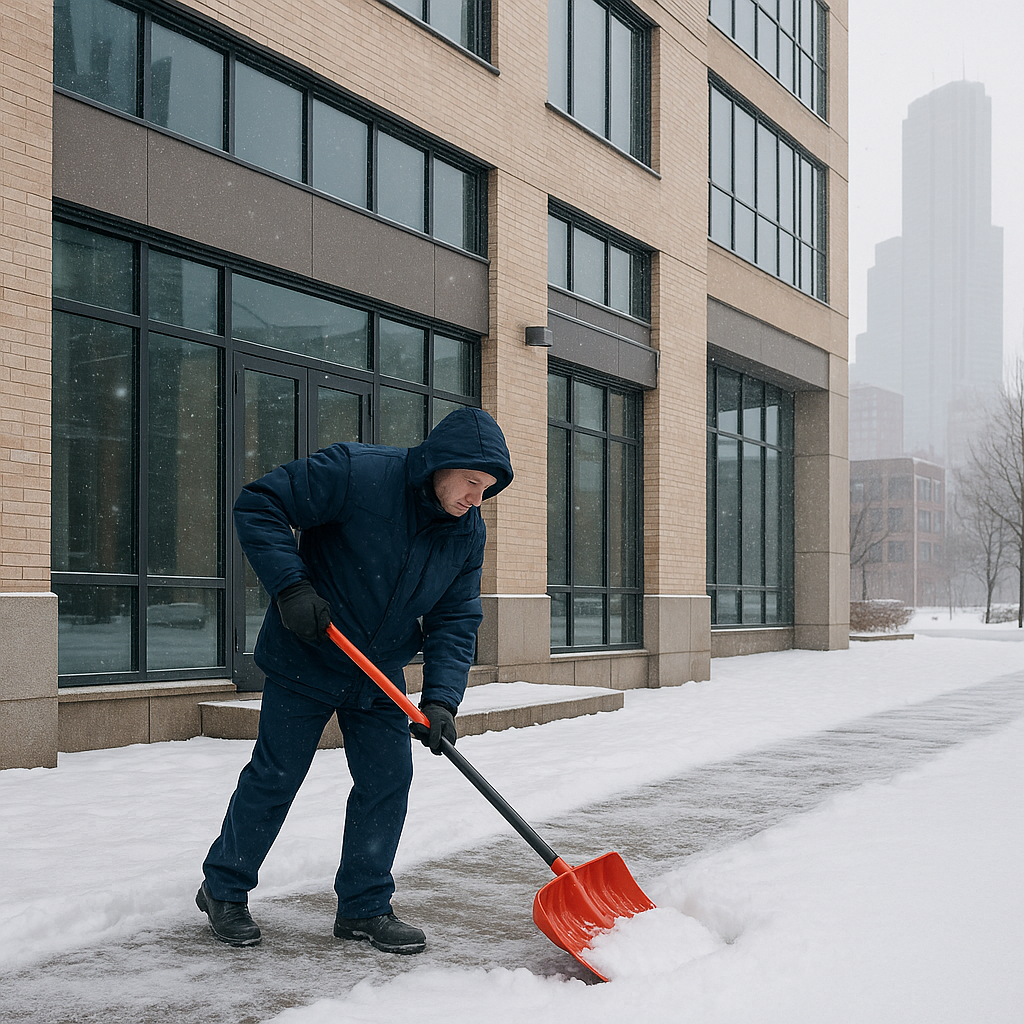
Snow may look harmless at first, but in Minneapolis it doesn’t take long for a few inches to become heavy, compacted layers that strain roofing systems, block entrances, and create dangerous walking conditions. Staying ahead of the weather helps reduce slip risks, structural stress, and emergency calls when storms hit.
Timely snow removal is one of the most effective ways to maintain safe access and protect the building envelope. For many properties, this isn’t just a convenience—it’s an important liability safeguard.
Prevent Ice Dams Before They Lead to Major Water Damage
Ice dams are one of the costliest winter issues for commercial buildings, and property managers often underestimate how quickly they can form. According to guidance from the University of Minnesota Extension, ice dams develop when heat escapes through the roof, melts the snow above it, and causes the water to refreeze along the roof edge.
This trapped water can lift roofing materials, seep into the structure, and lead to major repairs if not addressed early.
Commercial roofs in Minneapolis are especially prone to this because of wide roof spans and uneven heat distribution. The best prevention comes from a combination of proper insulation, well-maintained drainage systems, and routine inspections early in the winter season.
Acting before ice dams appear can save thousands in avoidable repairs.
Inspect Roofs and Drainage Systems for Freeze–Thaw Damage
Minneapolis experiences many days where temperatures fluctuate above and below freezing, causing roofing materials to expand and contract. Over time, this creates small cracks that let moisture seep in. When that trapped moisture freezes, it expands—and that’s when real damage begins.
Regular roof inspections help identify weakened areas, clogged drainage paths, and worn sealants. Even simple adjustments like clearing debris or re-securing loose flashing can make a dramatic difference in how well the building holds up through repeated freeze–thaw cycles.
Protect Building Exteriors From Harsh Freezing Weather
Exterior surfaces—including brick, stucco, siding, and façade joints—face winter’s full intensity. Temperature swings accelerate cracks, while wind drives moisture into even the smallest imperfections. Over time, water intrusion leads to structural deterioration that only reveals itself in spring.
A winter-ready approach includes checking sealants, repairing minor façade issues, and ensuring protective coatings are intact. These small steps help protect the building envelope and preserve long-term value, especially for properties exposed to open wind corridors.
Improve Heating Efficiency with Well-Maintained Windows
Commercial property managers in Minneapolis know that windows can be a major source of heat loss. Drafty windows not only reduce occupant comfort—they drive up heating costs quickly. Even a small crack in a seal or buildup of debris along sills can make indoor temperatures uneven.
Cleaning windows before winter is essential, but so is inspecting for loose frames, aging sealants, or fogging between panes. Buildings with large glass areas or high-rise exposure benefit greatly from professional attention to keep winter drafts under control.
This is another area where routine window care ties directly to commercial building maintenance, reinforcing how multiple services work together to improve overall efficiency.
Maintain HVAC Systems for Steady, Even Heat Distribution
When temperatures drop to extreme lows, heating systems run nearly nonstop. Any weakness in filters, blowers, or ductwork becomes more noticeable and more expensive. Regular HVAC maintenance ensures air moves efficiently throughout the building and prevents sudden failures during the coldest days.
Clean filters, properly calibrated thermostats, and balanced airflow help minimize energy waste and maintain indoor comfort for tenants and employees.
Ensure Fire Safety Systems and Emergency Exits Stay Clear
Snowdrifts and ice can easily block emergency exits, fire lanes, and designated safety pathways. Winter storms also affect the functionality of outdoor alarms, sprinkler components, or wall-mounted safety equipment.
Routine winter checks help maintain compliance with safety codes and protect occupants. This step is often overlooked but essential, particularly for multi-unit commercial properties where high traffic increases risk.
Keep Walkways, Parking Lots, and Entry Points Ice-Free
Frozen entryways are one of the most common causes of winter-related injuries. Ice buildup creates slip hazards that can lead to liability claims and operational disruption. Minneapolis winters require consistent de-icing practices that go beyond occasional salting.
Ensuring entry points, ramps, curbs, and parking surfaces stay clear protects tenants, visitors, and employees while keeping the property running smoothly.
Monitor Plumbing and Exposed Pipes to Prevent Freezing
Burst pipes can cause catastrophic damage during a Minneapolis winter. Exposed pipes, especially those in unheated sections of the building, need extra attention. Making sure insulation is secure, maintaining consistent indoor temperatures, and inspecting vulnerable areas can significantly reduce the risk of freezing.
This is one of the simplest yet most impactful building maintenance steps you can take.
Schedule Routine Winter Inspections for Ongoing Protection
Winter maintenance is not a one-time task—it’s a season-long responsibility. The best way to prevent emergency repairs is through regular inspections that identify small problems before they turn into major issues.
Many property managers partner with us for commercial property maintenance solutions, ensuring their buildings remain safe, efficient, and functional throughout the winter months. Early identification saves time, money, and stress when the weather becomes unpredictable.
Create a Stronger, Safer Building This Winter
Winter damage is preventable when you stay ahead of it. With the right maintenance strategy, Minneapolis commercial buildings can withstand harsh weather while protecting tenants, preserving efficiency, and reducing long-term repair costs.
At Ascent Building Service, we help Minneapolis property managers navigate winter confidently with hands-on expertise and a proactive approach to seasonal building maintenance.
If you’re ready to prepare your building for the months ahead, request a customized winter maintenance plan today.
FAQs
How do I prepare a commercial building for winter in Minneapolis?
Preparation includes snow readiness, roof inspections, window maintenance, HVAC checks, and routine monitoring of vulnerable areas like exposed pipes and walkways.
What are the most important building maintenance tasks during freezing weather?
Protecting roofs, windows, exteriors, and plumbing systems are top priorities, along with maintaining safe, ice-free walkways.
How can I prevent ice dams on a commercial roof?
Good insulation, clear drainage, and early-season inspections are key. FEMA guidance notes that heat escaping through the roof is the main cause of ice dams.
What is the best way to insulate windows in cold climates?
Proper sealing, clean glass surfaces, and professionally maintained window systems help reduce drafts and improve heating efficiency.
How often should snow and ice be removed from commercial walkways?
Snow should be cleared promptly after accumulation, with ice treated consistently throughout the day to reduce slip hazards.
Can high-rise buildings receive window maintenance during winter?
Yes—pre-winter and mid-winter cleanings help maintain clarity, insulation efficiency, and façade safety despite cold temperatures.
What building areas are most vulnerable to winter damage?
Roofs, windows, exteriors, entry points, and plumbing systems face the harshest winter stress and require ongoing attention.
